
A recent CNBC article used HealthVerity real-world data (RWD) to highlight a shortage of estrogen patches that is visible in RWD as demand for menopause support skyrockets. Menopause affects millions of women, yet it has long remained one of the most understudied and inconsistently treated stages of life. That is finally beginning to change. Renewed scrutiny, clinical guidance, and broader access to real world data (RWD) are reshaping how menopause is understood and managed across the healthcare ecosystem.
FDA menopause hormone therapy label changes: What changed and why it matters
In November 2025, the FDA initiated the removal of several longstanding black box warnings from estrogen containing menopausal hormone therapy (MHT) products. The agency moved to eliminate warnings related to:
- Cardiovascular disease
- Breast cancer
- Probable dementia
The FDA concluded these warnings no longer reflected the totality of contemporary science, particularly for healthy women under 60 or within 10 years of menopause onset.
However, one key black box warning remains:
- Endometrial cancer risk for systemic estrogen only therapy in women with an intact uterus.
The lead up to this regulatory shift has renewed clinical discussion around MHT, yet RWD is essential to understanding how this translates into patient behavior.
Real-world data reveals rising menopause treatment and hormone therapy use
An analysis of HealthVerity open claims data from 2021–2025 revealed some preliminary, directional trends that help illustrate how the menopause treatment landscape may be evolving:
1. Menopause treatment rates continue to rise
While the majority of menopausal women experience symptoms, not all seek or receive care. In 2021, an estimated 38% of menopausal women in our dataset received treatment. By 2025, this proportion rose to 54%, potentially indicating reduced fear, increased awareness of available treatments, and more supportive clinical dialogue. While momentum is building, the work is not done* (Figure 1).
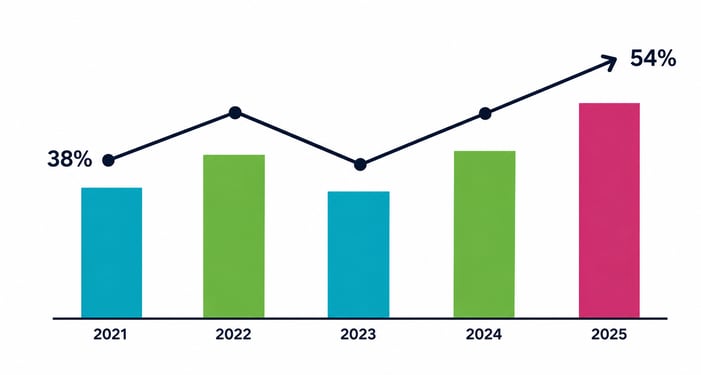
Figure 1: Treatment rates for menopausal women have steadily improved over the past five years. Data from HealthVerity Markeplace, open claims of patients with at least 1 Rx claim for treatment in the same year between Jan 2021 - Dec 2025.
*Note: While the majority of menopausal women experienced symptoms, not all are seeking treatment or being treated.
2. Systemic and local hormone therapy use continues to increase
Use of both systemic and local MHT increased year over year. This may reflect growing confidence in MHT as a safe and effective option for appropriate patients following updated regulatory guidance and broader educational efforts (Figure 2).
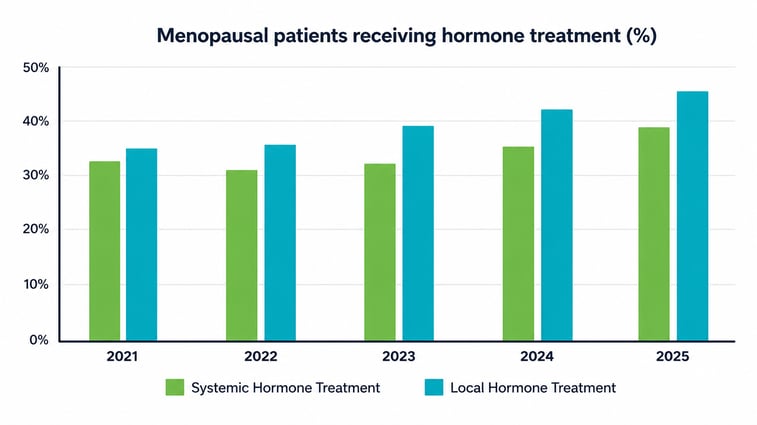
Figure 2: Use of both systemic and local MHT trends 2021-2025. Data from HealthVerity Markeplace open claims of patients with at least 1 Rx claim for treatment in the same year between Jan 2021 - Dec 2025.
3. Use of non-hormonal therapy as first-line treatment is declining
Initiation of nonhormonal therapies as first line treatment decreased from 33% to 22% over the period. When nonhormonal therapy was used, the most common drug classes were selective serotonin reuptake inhibitors (SSRIs) and serotonin-norepinephrine reuptake inhibitors (SNRIs) followed by gamma-aminobutyric acid (GABA) analogs (Figure 3).
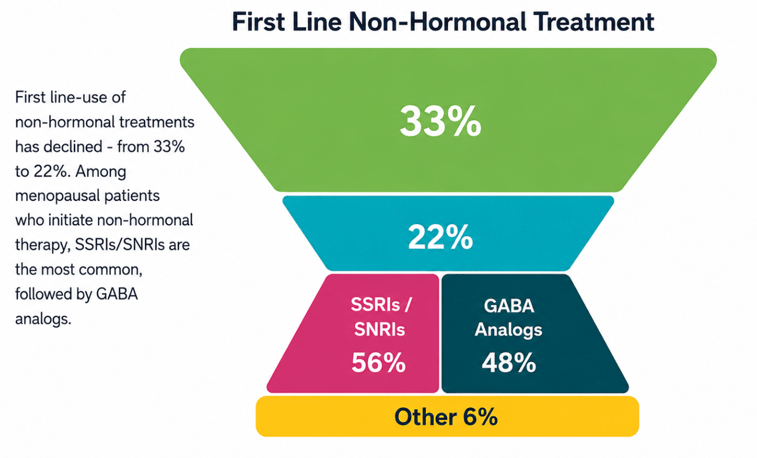
Figure 3: Use of non-hormonal therapy as first-line treatment
These directional observations suggest shifting prescribing and treatment seeking behavior, trends worth continuing monitoring as options, labeling, access, and awareness evolve. Data from HealthVerity Markeplace open claims of patients with at least 1 Rx claim for treatment in the same year between Jan 2021 - Dec 2025.
How social determinants of health influence menopause treatment
Understanding Social Determinants of Health (SDOH) is essential for identifying disparities in care and supporting more equitable, personalized treatment decisions. Preliminary RWD signals indicate that SDOH may shape which treatments women ultimately pursue and receive.
Differences between treated and untreated menopausal women
Between 2021 and 2025, African American menopausal women were disproportionately untreated. Untreated women, overall, also had limited education, lower transportation and technology access, and higher food insecurity compared to all menopausal women. These women are likely not asymptomatic, but may normalize symptoms, lack awareness of treatment options, deprioritize care, and/or find challenges entering treatment paths.
MHT utilization in the same period was concentrated in affluent, highly educated, White women aged 46-65 years old. They were more likely to exercise, reflecting higher self-management behaviors and have less access barriers than the overall menopausal population.
While many women pursue non-hormonal therapy because MHT is clinically contraindicated, data suggests SDOH may also influence this treatment path. Women initiating non-hormonal therapy tended to be older with poorer health, lower socioeconomic status, more access barriers, and higher food insecurity. However, Ddespite constraints, they are engaged as they are seeking symptom relief within their limits.
What these menopause treatment trends mean for healthcare and life sciences
These insights represent preliminary, directional findings. However, they suggest that menopause treatment decisions may be shaped by more than clinical factors alone. In addition to ethnicity, disparities linked to socioeconomic, logistical, and resource related constraints may influence whether women are willing to take MHT, pursue nonhormonal therapy, or remain untreated.
Opportunities to deepen this understanding through advanced analytics, include:
- Predictive modeling to anticipate treatment initiation or switching
- Longitudinal pathway mapping to identify where and why women experience drop off
- SDOH integrated segmentation to support more equitable commercialization and access strategies
- Impact modeling to forecast how regulatory changes, supply dynamics, and new product launches may reshape the menopause market
Utilizing robust RWD and sophisticated analytic approaches can help organizations gain clearer visibility into an increasingly dynamic treatment landscape.